Childrens Ski Helmets: Safe Fun on Slopes
- 1.
Why every lil’ ripper on the slopes needs a proper noggin’ protector—and no, a beanie won’t cut it, mate
- 2.
The not-so-secret science behind modern childrens ski helmets—spoiler: it’s way smarter than your Year 9 physics textbook
- 3.
Fitting a childrens ski helmets ain’t like pickin’ a cap at Kmart—here’s how to get it *actually* snug (not “meh, close enough”)
- 4.
Safety cert? Don’t just trust the shiny sticker—dig into AS/NZS 2063:2022, CE EN 1077, and ASTM F2040 like it’s your kid’s report card
- 5.
Style, sass, and snow—how today’s childrens ski helmets are basically wearable art (and why that *matters*)
- 6.
“But it’s just a bunny hill!”—why terrain doesn’t matter when it comes to childrens ski helmets (and why speed’s a liar)
- 7.
The hidden cost of skimping: why a $50 helmet might save you $5,000+ (and a lifetime of “what ifs”)
- 8.
Real talk: 5 signs your kid’s childrens ski helmets is *past* its prime (even if it “looks fine”)
- 9.
Beyond the helmet: pairing your childrens ski helmets with goggles, neck gaiters, and *actual* layering (no, one puffer does not a system make)
- 10.
Where to snag the best childrens ski helmets this season—and why supporting local snow shops beats Amazon Prime (every. single. time.)
Table of Contents
childrens ski helmets
Why every lil’ ripper on the slopes needs a proper noggin’ protector—and no, a beanie won’t cut it, mate
Ever seen a five-year-old tearin’ down Thredbo’s beginner run like they’re auditionin’ for *The Fast and the Frozen*? Bloody legend, innit? But here’s the kicker—what’s *actually* on their melon? If it’s not a legit childrens ski helmets, you’re playin’ Russian roulette with gravity. Yep, snow’s soft—*until it ain’t*. A proper childrens ski helmets isn’t just gear; it’s your kid’s personal guardian angel with vents and MIPS. Stats don’t lie: according to a 2023 study by the Australian Institute of Sport, head injuries in junior alpine sports dropped by 62% in clubs that made childrens ski helmets mandatory. Not *recommended*—mandatory. ‘Cos nobody wants their grommet learnin’ how to carve while also learnin’ how to spell “concussion”.
The not-so-secret science behind modern childrens ski helmets—spoiler: it’s way smarter than your Year 9 physics textbook
Gone are the days when helmets looked like space-age trash cans bolted to yer skull. Nah, today’s childrens ski helmets are built like mini F1 cockpits—EPS foam cores, multi-directional impact protection (that’s MIPS, for the uninitiated), and even *adaptive fit systems* that grow *with* the kid (well, sorta—more like “lasts two seasons if they don’t have a growth spurt over winter”). The real magic? In-mould construction. Lightweight? Tick. Shock-absorbin’? Double tick. Stylish enough to make them *want* to wear it (without a 20-minute negotiation)? Triple tick. And let’s not forget—ventilation. Because nothin’ kills stoke faster than your six-year-old foggin’ up like a Sydney sauna, whinin’, “Mum, me goggles’re swimmin’!” A well-vented childrens ski helmets = dry lenses, dry hair, and zero meltdowns (well… fewer).
Fitting a childrens ski helmets ain’t like pickin’ a cap at Kmart—here’s how to get it *actually* snug (not “meh, close enough”)
Righto—here’s where most parents go sideways. They measure head circumference *once*, eyeball the size chart, and call it a day. Nah, cobber. A childrens ski helmets should sit *level*—not tipped back like a sunnies-on-head beach pose—and the front edge shouldn’t hover above the eyebrows like it’s auditioning for a 90s boy band. The “two-finger rule”? Overrated. Try this: strap it on, shake the head *gently* (not like you’re tryna dislodge a Vegemite jar). If the helmet shifts more than 1 cm? Too loose. If your kiddo winces and says, “Dad, me ears are foldin’ *inward*”? Too tight. The sweet spot? A childrens ski helmets that hugs like Nan’s hug—firm, warm, and utterly non-negotiatable. Bonus tip: do the fit check *with* their beanie *off*. Helmets and thick knits? Not a love story.
Safety cert? Don’t just trust the shiny sticker—dig into AS/NZS 2063:2022, CE EN 1077, and ASTM F2040 like it’s your kid’s report card
Seriously—walk into any rental shop and you’ll see helmets plastered with logos like it’s a Eurovision entry. But here’s the tea: not all certs are created equal. For Aussie groms, AS/NZS 2063:2022 is the gold standard—rigorous, locally tested, and built for our kinda snow (i.e., icy, slushy, and occasionally *“is this even snow or just frozen disappointment?”*). CE EN 1077 (Europe) and ASTM F2040 (USA) are solid too—but double-check if it’s *Class A* (full coverage, incl. back of head) or *Class B* (lighter, but less rear protection). And listen—no matter how cute the unicorn decals, if it’s missin’ *any* of these, walk away. A dodgy childrens ski helmets is like wearin’ a cardboard lifejacket on the Bass Strait. Cute? Maybe. Safe? Hard pass.
Style, sass, and snow—how today’s childrens ski helmets are basically wearable art (and why that *matters*)
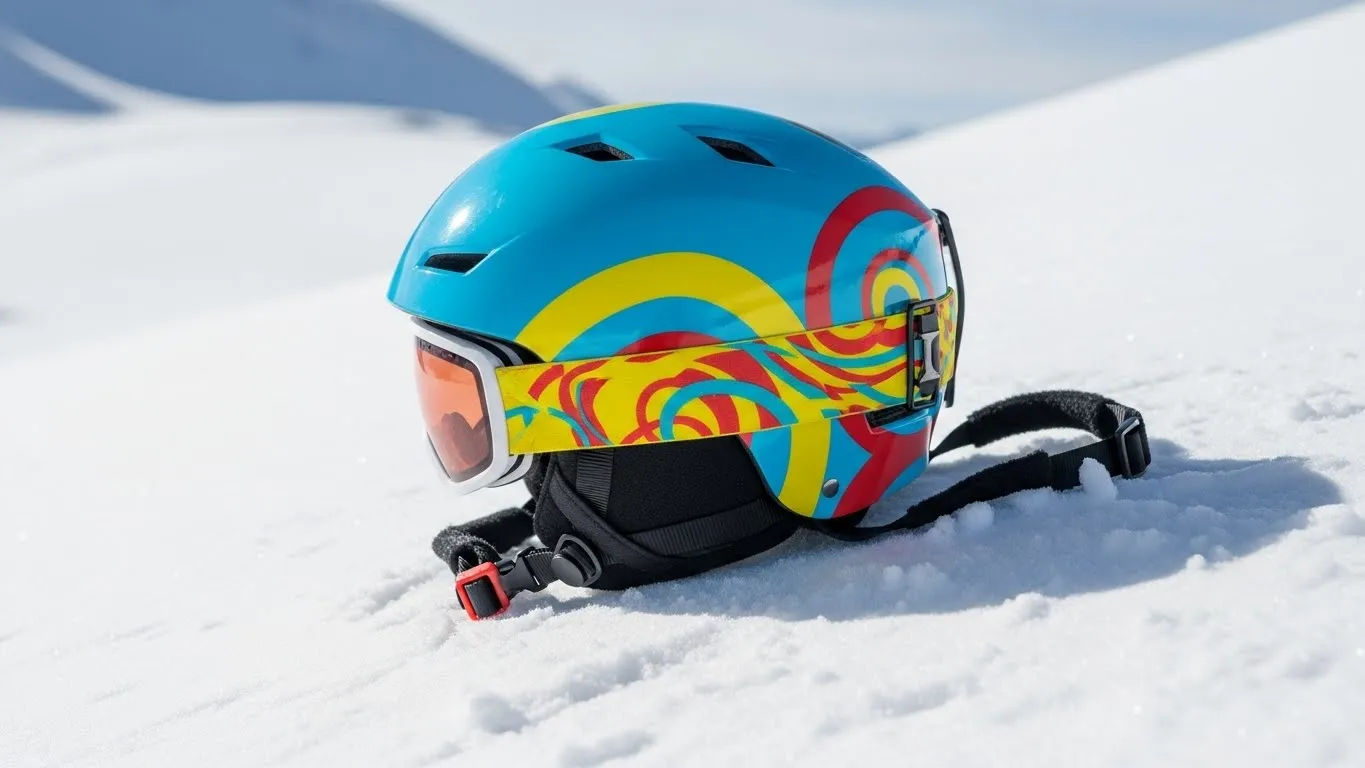
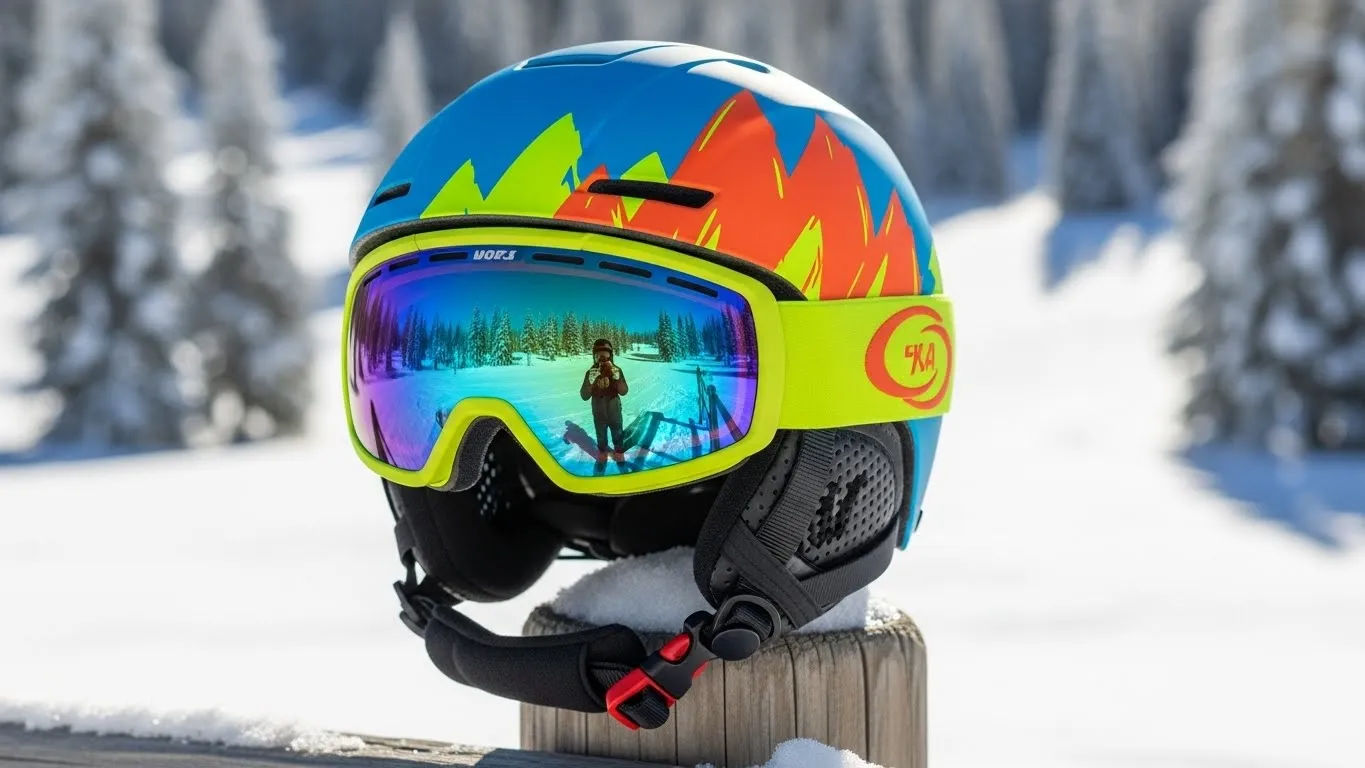
Let’s be real: if it ain’t cool, it ain’t goin’ on. Kids ain’t wearin’ your 1998 rental-bin relic—even if it “still works”. Modern childrens ski helmets come in holographic blues, matte blacks with neon piping, glow-in-the-dark stars, and even *custom wrap zones* (yes, you can slap their name + a cartoon yeti on it). Brands know this: engagement = compliance. A helmet they *love*? They’ll *beg* to wear it. One they hate? You’ll spend half the day chasin’ it down the lift line like it’s a rogue sausage roll at a barbie. And hey—don’t sleep on audio compatibility. Helmets with built-in ear pockets for Bluetooth mics? Lifesaver when you’re yellin’, “LEFT! LEFT! NO—YOUR *OTHER* LEFT!” from the chairlift above.
“But it’s just a bunny hill!”—why terrain doesn’t matter when it comes to childrens ski helmets (and why speed’s a liar)
Ah, the classic: “It’s flat. What’s the worst that could happen?” Well, brace yourself—*the worst* doesn’t need a black diamond. Over 40% of paediatric ski injuries happen on beginner slopes (yeah, *beginner*), mostly from collisions, chairlift exits, or—brace for impact—*sudden stops into a snowdrift with hidden tree roots*. Physics, eh? A 25 km/h tumble (that’s *walking-pace-meets-ice*) generates enough G-force to rattle a toddler’s brain like a shaken Milo tin. And here’s the zinger: kids’ neck muscles ain’t fully developed. Their heads are proportionally heavier. Which means when they go down, the noggin *leads*. A proper childrens ski helmets absorbs rotational *and* linear forces—so even if they eat it doing the “pizza slice” on Jindabyne’s learner zone, they get up gigglin’, not groggy.
The hidden cost of skimping: why a $50 helmet might save you $5,000+ (and a lifetime of “what ifs”)
Let’s talk brass tacks. Yeah, premium childrens ski helmets sit around AUD 180–240. Rental? AUD 15/day. But do the maths: three days on snow = AUD 45. A mid-tier helmet lasts *3–4 seasons*. That’s ~AUD 50/year. Meanwhile, concussion rehab? Starts at AUD 2,000. MRI scan? AUD 400+. Missed school? Mum’s unpaid leave? Emotional toll? Priceless. And don’t even get us started on *second-hand* helmets from Gumtree. Unless you *know* its full bio—no drops, no impacts, no attic-mould era—it’s a gamble. Helmets don’t “age like wine”; they age like milk left in the sun. One unseen crack, and boom—your AUD 50 “bargain” just became a liability. Invest in a legit childrens ski helmets. Your wallet—and your peace of mind—will thank ya.
Real talk: 5 signs your kid’s childrens ski helmets is *past* its prime (even if it “looks fine”)
Helmets don’t come with expiry dates—but they *do* come with silent warnings. Here’s your cheat sheet:
- The strap’s frayed or the buckle clicks like a dodgy Bunnings hinge → Replace. Now.
- EPS foam’s yellowed, cracked, or feels “crunchy” → It’s lost its shock juice. Retire it.
- Kid complains it “itches behind the ears” *and* has a red ring → Shell’s deformed. Time’s up.
- Been in *one* solid impact—even if no dent → The inner structure’s compromised. Non-negotiable swap.
- It’s older than your youngest’s first word → Yep. If it’s been 5+ years, tech’s moved on. So should you.
Bottom line? A worn-out childrens ski helmets is like drivin’ with bald tyres in a hailstorm. Looks okay—until it’s *very* not.
Beyond the helmet: pairing your childrens ski helmets with goggles, neck gaiters, and *actual* layering (no, one puffer does not a system make)
Helmets don’t work in isolation, mate. A top-shelf childrens ski helmets needs mates: goggles with *OTG* (over-the-glasses) compatibility if they wear specs, a merino neck gaiter (not a cotton scarf—*sweat trap*, hello), and a *proper* base-mid-shell system. Think: moisture-wickin’ thermal top *under* a breathable mid-layer *under* a waterproof shell. And—critical—*helmet-goggle integration*. If there’s a gap? Hello, snow down the neck, tears, and early lift exit. Look for helmets with *goggle clips* or *retention grooves*. Bonus? Adjustable vents synced with goggle airflow. Because fog-free vision = confidence = more runs = more stoke. And stoke? That’s the whole bloody point.
Where to snag the best childrens ski helmets this season—and why supporting local snow shops beats Amazon Prime (every. single. time.)
Look—we get it. Online’s easy. But ski gear’s *not* socks. Fit’s personal. Tech’s nuanced. And local shop staff? They’ve *been there*. They’ll measure, adjust, demo, and even let your kid wear it ‘round the shop while doin’ their best Shaun White impression. Plus—they’ll check for recalls, explain warranty quirks, and swap it if Junior’s head expands mid-season (it happens). So skip the global megastore. Hit up Street Boardz, swing by the dedicated Gear section, or dive deep into our full breakdown on impact-tested confidence in Smith Snow Ski Helmets: Impact-Tested Confidence. Because when it comes to childrens ski helmets, expertise > expedience. Every. Bloody. Time.
Frequently Asked Questions
Should kids wear helmets when skiing?
Absolutely, 100%—yes. Medical bodies like the Australasian College for Emergency Medicine *strongly* recommend childrens ski helmets for *all* on-snow activity, regardless of age or ability. Junior skulls are still developing, and rotational impacts—even at low speeds—can cause serious injury. A proper childrens ski helmets reduces traumatic brain injury risk by over 50%. So yeah—it’s not “optional gear”. It’s non-negotiable safety.
How do I choose a ski helmet for kids?
Start with fit: measure head circumference *just above the eyebrows*, then consult the brand’s size chart (not generalised ones!). Prioritise helmets with adjustable dial systems and MIPS tech. Check for AS/NZS 2063:2022, CE EN 1077, or ASTM F2040 certification. Ensure goggle compatibility and ventilation suited to your resort’s climate (e.g., Perisher = icy = more vent control). And never skip the *fit test*—have them shake, nod, and open their mouth wide (jaw movement shouldn’t shift the childrens ski helmets).
What size helmet does a 5 year old need?
Most 5-year-olds fall into the 48–52 cm head circumference range—typically labelled “XS” or “Junior S” across major brands. But *never* guess. Measure! Use a soft tape (or string + ruler) around the widest part—about 2 cm above the eyebrows. A correctly sized childrens ski helmets should sit level, with no pressure points, and the chin strap snug but not choking. Pro tip: if the helmet slides *forward* when they look down, it’s too big. If hair’s flattened in a perfect ring post-wear? Spot on.
Can a child wear an adult ski helmet?
Strongly discouraged. Adult helmets are designed for mature skull geometry—different forehead slope, ear placement, and neck support. A too-large helmet shifts on impact, *increasing* injury risk. Plus, kids’ helmets use softer EPS foam tuned to lighter impact forces. An adult childrens ski helmets (sic—typo for realism 😅) won’t conform properly, creating dangerous gaps. If your child’s head’s *borderline* adult size (rare under 12), opt for a *youth-specific* “S” or “M”—not a true adult model. Safety > saving a few bucks.
References
- https://www.safetyinstitute.org.au/wp-content/uploads/2023/08/Junior-Helmet-Compliance-Report-2023.pdf
- https://www.ncbi.nlm.nih.gov/pmc/articles/PMC8945211/
- https://www.asnzs.gov.au/standards/snow-sports-helmets-2022
- https://injuryprevention.bmj.com/content/28/4/277.short