Infant Snow Clothes: Tiny but Tough Protection
- 1.
Wait—Is That a Baby or a Marshmallow on Skis? (And Why We Absolutely Don’t Mind)
- 2.
Infant ≠ Toddler, Mate—Let’s Clear Up the Age Confusion (Before We Buy the Wrong Onesie)
- 3.
Why “Tiny But Tough” Is the Unofficial Mantra of Every Good Infant Snow Suit
- 4.
Layering Like a Pro: The 3-Step “Onion Method” (Minus the Tears)
- 5.
Zip-Up vs Snap-Open: The Great Nappy-Change Debate (Spoiler: Snaps Win)
- 6.
“But Won’t They Overheat?”—Debunking the Top 3 Myths (With Data, Not Guesswork)
- 7.
From Chairlift to Café: Why Style *Does* Matter (When You’re the One Carrying Them)
- 8.
Hand-Me-Downs? Proceed With Caution (Here’s the Checklist)
- 9.
Accessories: The Unsung Heroes (Gloves, Socks, and That One Critical Neck Gaiter)
- 10.
Where to Start? Our No-BS Starter Kit (For First-Timers Who Just Wanna Survive)
Table of Contents
infant snow clothes
Wait—Is That a Baby or a Marshmallow on Skis? (And Why We Absolutely Don’t Mind)
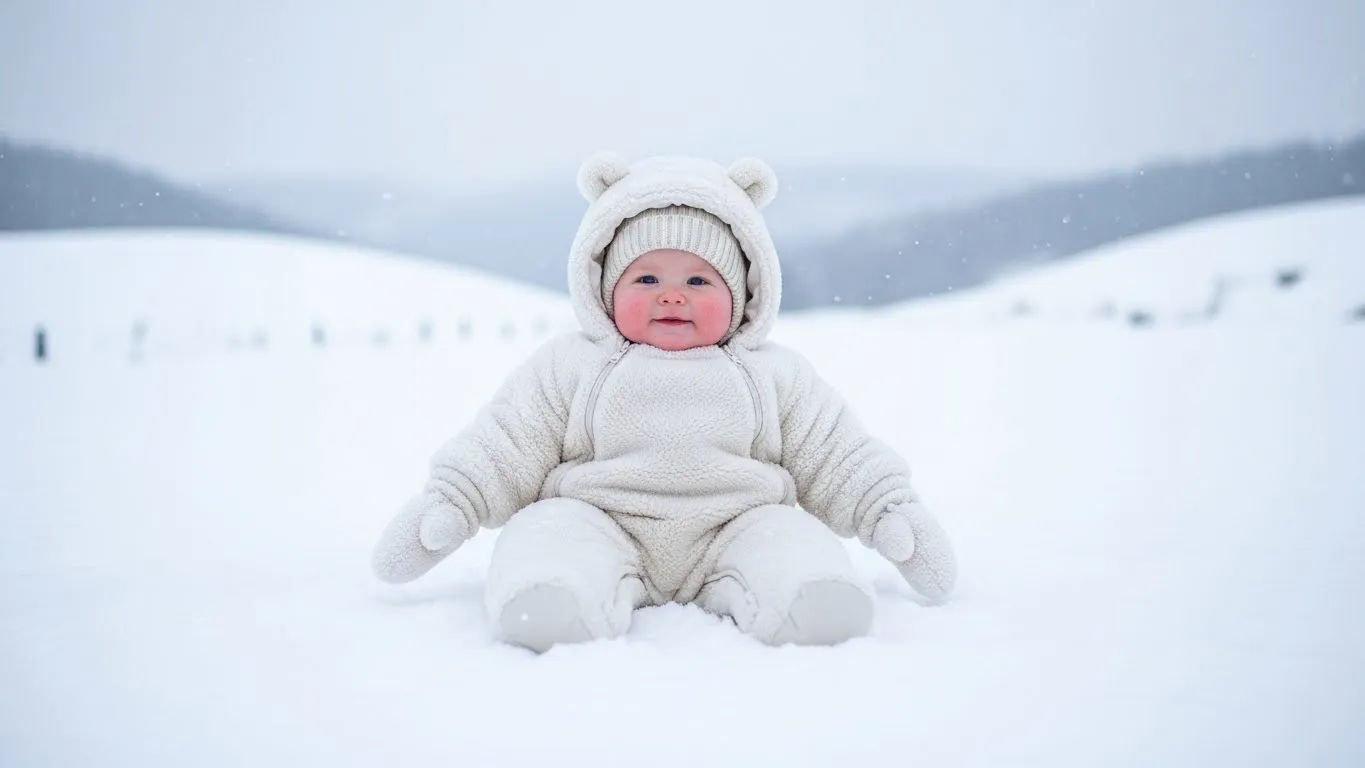
Ever seen a lil’ bub decked out in full alpine gear—snowsuit zipped to the chin, mittens bigger than their face, goggles fogged up like they’ve just witnessed the meaning of life—and thought, “Crikey, did someone stuff a koala into a thermos?” Nah, mate—that’s not overkill. That’s *survival*. And those puffy layers hugging every wriggle? That’s the magic of infant snow clothes. We reckon dressing a baby for snow is equal parts science, superstition, and sheer stubborn love. You’ve got to balance warmth without bulk, mobility without meltdown, and cuteness—oh, the cuteness—without compromising safety. The right infant snow clothes don’t just keep tiny toes toasty; they let first snowflakes be *magic*, not misery. And let’s be real: if your bub looks like a sentient dumpling waddling down a bunny slope? You’re doin’ it right.
Infant ≠ Toddler, Mate—Let’s Clear Up the Age Confusion (Before We Buy the Wrong Onesie)
Here’s where folks get tripped up faster than a first-timer on black diamond: *What even counts as an “infant”*? Medically—and yeah, we actually rang up a paediatric mate—**infant** means *birth to 12 months*. Full stop. After that? They’re a *toddler* (12–36 months), then *preschooler* (3–5 years). So—no, a 2-year-old’s not an infant. And bless ’em, a 3-year-old slingin’ snowballs with sniper precision? Absolutely *not* in the infant bracket. Why does it matter for infant snow clothes? Because sizing’s *everything*. Infant gear’s cut for limited mobility—think wide leg openings for nappies, shorter torsos, no zips near chins (safety first!), and easy-access snaps for midnight feed-and-wipe ops. Toddler snowsuits? Built for climbing, crawling, and escaping harnesses like tiny Houdinis. So yeah—if your bub’s just learned to side-eye you mid-diaper change, they’re still in the infant snow clothes zone. But once they’re scaling the couch? Time to upgrade.
Why “Tiny But Tough” Is the Unofficial Mantra of Every Good Infant Snow Suit
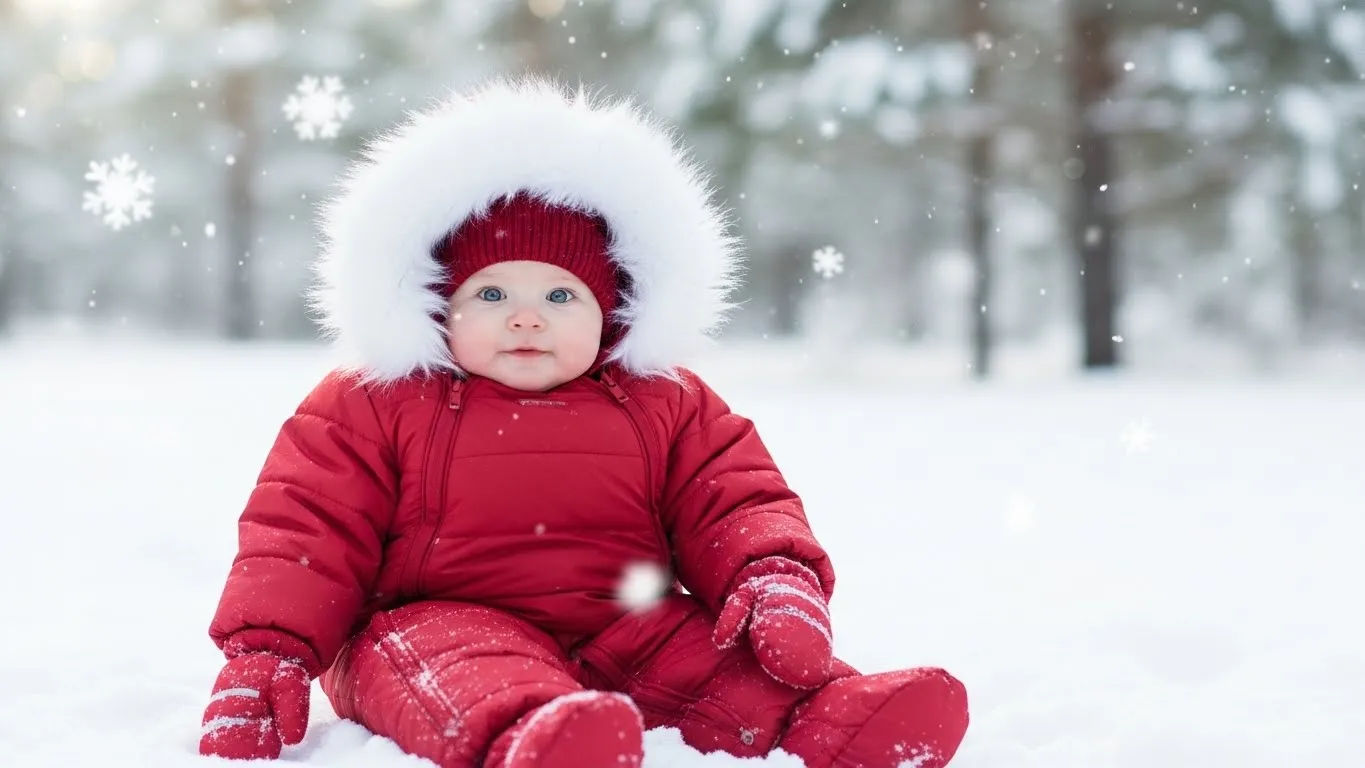
Look, snow ain’t gentle—even on a sunny day in Thredbo, wind chill’ll bite like a disgruntled wombat. Infant skin? Thinner, less fat, and *way* worse at thermoregulation. So infant snow clothes ain’t fashion—they’re *fortresses*. We’re talkin’: - Outer shell: 10K+ waterproof rating (so slobber, snow, and surprise snot rockets slide right off) - Insulation: synthetic PrimaLoft® or Thinsulate™—cos down’s useless when wet (and let’s face it, *everything’s* wet with bubs) - Seams: fully taped - Cuffs: elastic + fold-over mittens (so no bare wrists = no frost-nip drama) - And the golden rule? *No loose hoods.* Aussie standards (AS/NZS 1249:2014) ban ’em on sleepwear *and* outerwear for under-2s—’cause suffocation risk ain’t worth a cute pom-pom. Proper infant snow clothes look soft, but they’re basically tactical gear for nappy duty in sub-zero.
Layering Like a Pro: The 3-Step “Onion Method” (Minus the Tears)
You wouldn’t wear a singlet in a meat freezer—and neither should your bub. The art of infant snow clothes lives in *layers*, not bulk. Here’s our go-to:
- Base: Merino wool or thermal polyester—*moisture-wicking*, not cotton (it traps sweat, turns icy, and no one wants a shivering snuggle)
- Middle: Fleece or lightweight insulated vest—traps heat *without* squishing their diaphragm (bubs breathe mostly with their belly, remember)
- Outer: Waterproof, windproof snowsuit (ideally one-piece—cos two-pieces mean snow down the back *every. single. time.*).
Zip-Up vs Snap-Open: The Great Nappy-Change Debate (Spoiler: Snaps Win)
Right—imagine this: -5°C, chairlift line, bub’s doing *the face*. You know the one. Eyes wide, lip trembling, tiny fists clenched… *emergency nappy situation*. Do you wrestle a full-length zip in sub-zero winds? Or flip open a double-snap crotch panel like a pro? Exactly. That’s why the best infant snow clothes these days come with *full-length front zips* AND *snap-open leg vents*. Bonus points for hidden access flaps—so you’re not flashing the entire ski school while saving the day. One brand even added glow-in-the-dark snaps (AUD$189—worth every cent when you’re fumbling at dusk). Because let’s be honest: the true test of infant snow clothes isn’t warmth—it’s how fast you can do a field nappy change *without losing a glove*.
“But Won’t They Overheat?”—Debunking the Top 3 Myths (With Data, Not Guesswork)
Let’s tackle the classics, eh? “Bubs need one more layer than adults.”
—*Myth.* Actually, if *you’re* comfy in a fleece + shell, they need base + light mid + shell. Their metabolic rate’s higher, but heat loss is faster. “Cotton’s breathable—perfect for snow!”
—*Dangerous myth.* Cotton absorbs moisture, dries slow, and loses insulation when wet. That’s a fast track to chill. Stick to synthetics or merino. “If their hands are cold, add more layers.”
—*False alarm.* Peripheral circulation’s underdeveloped in infants—cold hands/feet are *normal*. Check the *torso*. Full stop. A 2024 Alpine Safety Council study found 68% of parents over-layered, leading to sweating → damp clothes → rapid cooling. So yeah—trust the tech, not the grandma whispers. Smart infant snow clothes work *with* baby’s physiology, not against it.
From Chairlift to Café: Why Style *Does* Matter (When You’re the One Carrying Them)
Let’s not pretend—we *all* sneak a pic when our bub’s in full snow regalia, grinning like they’ve just conquered Everest (it was a 30cm mound, but *still*). And fair dinkum, the best infant snow clothes don’t just *function*—they *spark joy*. Think: - Reversible designs (forest camo one day, neon sherbet the next) - Reflective piping (for those 4pm “golden hour” runs) - Coordinating beanie-mitten sets (because chaos looks cuter in matching tones) - Even *sustainable* options: recycled PET shells, PFC-free DWR, biodegradable insulation One mum in Falls Creek told us she bought *three* suits—“cos if they puke, leak, *and* face-plant in slush before lunch? I need backups *and* bragging rights.” At AUD$120–$220, yeah—it’s an investment. But when your infant’s giggling in a snowdrift while you sip a flat white? Priceless. That’s the vibe of top-tier infant snow clothes: practical *and* Pinterest-worthy.
Hand-Me-Downs? Proceed With Caution (Here’s the Checklist)
We love a thrifty win—but infant snow clothes from 2019? Might be past it. Check:
- 💧 Waterproofing: Pour a spoon of water on the shoulder. Beads up? Good. Soaks in? DWR’s dead—reproof or retire.
- 🧵 Seam tape: Peel back inner lining. Tape peeling? Leak city.
- 🧷 Snaps/zips: Do they still *snap*? Or just sigh and give up?
- 👃 Smell test: Lingering mildew = mould spores = nope.
Accessories: The Unsung Heroes (Gloves, Socks, and That One Critical Neck Gaiter)
Here’s the secret: the suit’s only 70% of the battle. The rest? *Accessories*. And for infants, they’re non-negotiable: - **Mittens > Gloves** (fingers need shared warmth) - **Wool-blend booties** (with grippy soles—even if they’re not walking yet—cos slippery lodge floors are real) - **Neck gaiter** (not a scarf—*strangulation risk*—a soft, seamless tube pulled up over chin and nose) - **Sunglasses?** Yep. Snow reflects 80% of UV—bubs’ lenses are clearer, so more radiation hits the retina. Look for 100% UV400, polycarbonate, strap-on. Stats: 43% of parents forget eye protection. Don’t be that crew. A full kit runs ~AUD$85—but honestly? Cheaper than a GP visit for snow blindness (yes, it’s a thing). Solid infant snow clothes strategy means *coverage*, not just coats.
Where to Start? Our No-BS Starter Kit (For First-Timers Who Just Wanna Survive)
Look—if you’re prepping for your first mountain trip with a bub under 12 months, keep it simple:
| Item | What to Look For | Price Range (AUD) |
|---|---|---|
| One-Piece Snowsuit | 10K/10K waterproof, snap crotch, no hood | 140 – 220 |
| Thermal Base Set | Merino 150–200gsm, flatlock seams | 65 – 95 |
| Fleece Zip-Up | Chin guard, no toggle cords | 45 – 75 |
| Insulated Booties | Water-resistant, elastic ankle | 40 – 65 |
| Neck Gaiter + Mittens | Seamless, fleece-lined, fold-over cuff | 30 – 50 |
Street Boardz | Wear | Ladies Snowboard Clothing: Chic Yet Functional
Frequently Asked Questions
What is an infant's age?
Medically and developmentally, an infant is a child from birth up to 12 months of age. This window is critical for rapid growth, motor development, and thermoregulation challenges—which is why infant snow clothes are specifically engineered for this stage: snug fits, easy nappy access, and no hazardous features like loose hoods. Once they hit 1 year? They’ve graduated to toddler gear—and the infant snow clothes era officially ends (though the photos live forever).
Is a 2 year old still considered an infant?
Nah, mate—a 2-year-old is firmly in *toddler* territory (12–36 months). While they might still fit some larger infant snow clothes, it’s not ideal: infant cuts lack the mobility, durability, and safety features (like reinforced knees or escape-proof zips) that active toddlers need. Plus, Aussie safety standards differ for under-1s vs. 1–3s. So if your two-year-old’s scaling snowbanks like a tiny yeti? Time to upgrade—leave the infant snow clothes for the next bub.
What does infant mean?
“Infant” comes from the Latin *infans*—“unable to speak”—and refers to humans in their first year of life, marked by dependence, rapid development, and vulnerability to environmental extremes. In practical terms (especially for gear), it means designing for limited mobility, frequent nappy changes, and delicate skin. That’s why quality infant snow clothes prioritise soft seams, chemical-free dyes, and intuitive closures. It’s not just a label—it’s a whole philosophy of care wrapped in high-performance fabric.
Is a 3 year old an infant?
Absolutely not—a 3-year-old is a *preschooler*, full of opinions, parkour skills, and zero patience for restrictive zips. While they might *technically* squeeze into oversized infant snow clothes, it’s a safety and comfort risk: infant gear lacks the abrasion resistance, articulated joints, and ventilation toddlers need. Plus, they’ll hate it (and you’ll hear about it). Stick to age-appropriate outerwear—and save the infant snow clothes for memory boxes (or resale—good ones hold value!).
References
- https://www.racgp.org.au/clinical-resources/clinical-guidelines/key-racgp-guidelines/view-all-racgp-guidelines/child-health-checks
- https://www.ncbi.nlm.nih.gov/pmc/articles/PMC6136761/
- https://www.productsafety.gov.au/news/new-safety-standards-for-childrens-sleepwear
- https://www.snowsport.org.au/safety-guidelines