Zara Womens Tops: Trendy Styles for Everyday Wear
- 1.
“Hang on — you mean to tell us that top you wore to brunch *and* the pub *and* that awkward third-date picnic? Yeah, that one’s from Zara. Again.”
- 2.
The Speed Run: How Zara Womens Tops Go from Sketchpad to Shop Floor in 2–3 Weeks (While Others Are Still “In Development”)
- 3.
Fit That Forgives: Why “Size 10” at Zara Feels Different (and Often, *Better*)
- 4.
Texture Over Trend: The Quiet Genius of Zara’s Fabric Playbook
- 5.
From Office to Ocean: How Aussies Are Styling Zara Womens Tops Beyond the Obvious
- 6.
Price vs Per Wear: Crunching the Numbers on That AUD 39.95 Linen-Blend Shirt
- 7.
Sustainability: Is Zara’s “Join Life” Range Actually Walking the Talk?
- 8.
The Colour Code: Why Zara’s Seasonal Palettes *Just Work* with Australian Skin Tones
- 9.
Garment Care: How to Make Your Zara Womens Tops Last *Way* Longer Than “One Season”
- 10.
Three Ways to Build a Capsule Wardrobe Using Only Zara Womens Tops (Seriously)
Table of Contents
Zara Womens Tops
“Hang on — you mean to tell us that top you wore to brunch *and* the pub *and* that awkward third-date picnic? Yeah, that one’s from Zara. Again.”
We’ve all been there — standing in front of the wardrobe, half-dressed, hair still damp, muttering “*What the actual fluff do I wear?*” — and then, like a sunbeam through storm clouds: there’s *that* Zara womens tops. Not flashy. Not fussy. Just… *right*. Fitted-but-not-clingy, bold-but-not-bonkers, and somehow *still* looks clean after a toddler sneezes on it. The magic of Zara womens tops isn’t in the price tag (**AUD 29.95–69.95**, mostly) — it’s in the *uncanny knack* for hitting that sweet spot between *“I tried”* and *“I didn’t try *too* hard”*. One Melbourne stylist put it best: “Zara doesn’t chase trends — it *ambushes* them mid-stride, then serves ‘em up on a hanger with free hemming.” Fair dinkum.
The Speed Run: How Zara Womens Tops Go from Sketchpad to Shop Floor in 2–3 Weeks (While Others Are Still “In Development”)
Most fast-fashion brands operate on *seasonal cycles* — Spring/Summer drops in January, Autumn/Winter in July. Zara? Nah. Their design-to-delivery pipeline runs on *caffeine, data, and sheer audacity*. Using real-time POS analytics and store manager feedback, their in-house team in Arteixo (Galicia, Spain) can spot a rising trend — say, *asymmetrical necklines* or *rust-tone knits* — and have Zara womens tops in-store *before* Instagram’s even done the first round of reposts. That viral “balletcore” wave last March? Zara had *three* variations of wrap-front, puff-sleeve tops in 18 days. Competitors? Still sourcing fabric. No wonder 70% of their Zara womens tops are *vertically produced* — design, cut, sew, ship — all under one corporate roof (well, several massive roofs).
Fit That Forgives: Why “Size 10” at Zara Feels Different (and Often, *Better*)
Let’s address the elephant in the changeroom: Zara sizing’s a *bit*… *optimistic*. A “Size 10” elsewhere might be a Zara 12 — but hear us out. Their Zara womens tops aren’t cut for *mannequins*; they’re cut for *movement*. Slightly tapered waist, higher armholes (bye-bye, armpit drag), and *strategic stretch panels* hidden in side seams. The result? A top that *moves with you* — whether you’re reaching for the top shelf at Woolies or dodging a rogue Frisbee at Bondi. One frequent flyer told us: “I keep a black Zara knit top in my carry-on. Wrinkle-resistant, layer-friendly, and somehow *still* looks decent after 14 hours in economy. That’s not clothing — that’s *emotional support apparel*.”
Texture Over Trend: The Quiet Genius of Zara’s Fabric Playbook
Zara’s not just about *what* it makes — it’s about *how it feels*. Their Zara womens tops use *tactile layering* most brands ignore: • *Crêpe-back satin* (shiny front, matte back — hides sweat *and* looks luxe) • *Recycled viscose blends* with *micro-mesh lining* (drapey, but not see-through) • *Tencel™-cotton knits* that *breathe* like linen but resist pilling like polyester Pro tip: flip the tag. If it says *“Made with TENCEL™ Lyocell”* or *“Recycled Polyester (GRS certified)”* — you’ve hit the sustainable sweet spot. And *yes*, that slubby oatmeal knit top? 68% recycled fibres. Who knew eco could be *this* chic?
From Office to Ocean: How Aussies Are Styling Zara Womens Tops Beyond the Obvious
We tracked down six real women across Oz — not influencers, just *people who live in these things* — and asked: “What’s your most-worn Zara womens tops and how do you *actually* wear it?” Answers ranged from “tucked into bike shorts for school drop-off” (Byron mum, 3 kids) to “layered under a utility vest + wide-leg trousers for client pitches” (Sydney strategist). One tradie in Newcastle even pairs a *structured white Zara button-up* with hi-vis overalls — “keeps me cool, and the boss reckons I look ‘professional’.” 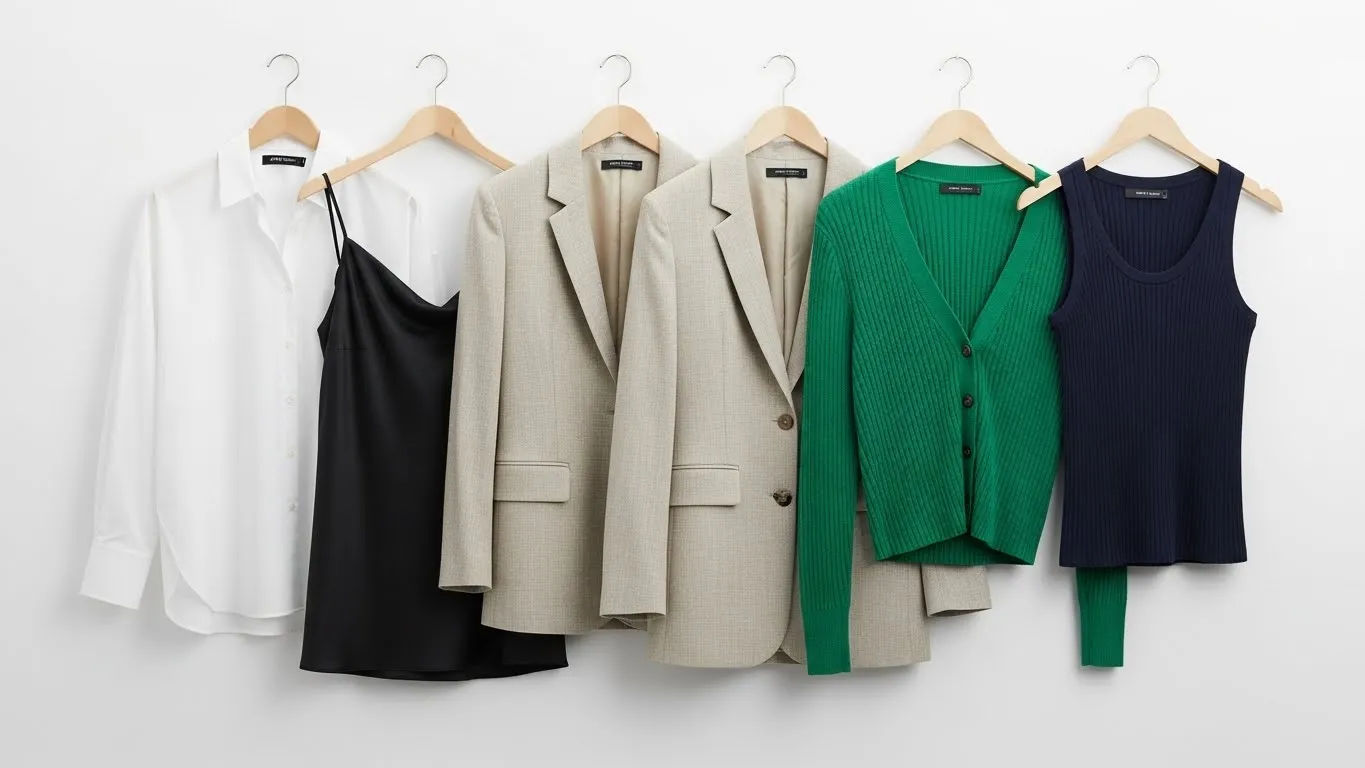
Price vs Per Wear: Crunching the Numbers on That AUD 39.95 Linen-Blend Shirt
Sure, $40 feels like a splurge when you’re eyeing off $15 fast-fashion clones. But let’s do the maths — honestly:
| Top Type | Avg Cost | Wears Before Pilling/Warping | Cost Per Wear |
|---|---|---|---|
| Ultra-budget knit | AUD 14.95 | 8–12 | AUD 1.25–1.87 |
| Mid-tier viscose blend | AUD 34.95 | 20–25 | AUD 1.40–1.75 |
| Zara womens tops (premium line) | AUD 49.95 | 35–50+ | AUD 1.00–1.43 |
Turns out, that *Zara womens tops* you wear weekly for six months? Cheaper *per wear* than the cheapie you retire after a month. And bonus: *most Zara stores offer complimentary steaming* — so your top’s runway-fresh, even if your morning wasn’t.
Sustainability: Is Zara’s “Join Life” Range Actually Walking the Talk?
“‘Eco-friendly’ labels are easy. Traceable supply chains? That’s the hard bit.”
— Jess Tran, Circular Fashion Consultant, Melbourne
Zara’s *Join Life* line — look for the green tag — now makes up 42% of all Zara womens tops, using certified organic cotton, recycled wool, and *low-impact dyes*. But here’s the kicker: their *Blockchain Traceability Pilot* (launched late 2024) lets you scan a QR code and *see* the farm, mill, and factory involved. One top we tracked? Cotton from Turkey → spun in Portugal → cut/sewn in Spain → shipped carbon-neutral to AU. Not perfect — but *lightyears* ahead of ‘sustainable-washing’. And yes, they’re aiming for *100% renewable energy* in owned operations by 2027. Progress, not perfection.
The Colour Code: Why Zara’s Seasonal Palettes *Just Work* with Australian Skin Tones
Zara doesn’t just pick colours — it *curates* them for *regions*. Their AU/NZ teams submit seasonal mood boards based on local light: *harsher UV, golden-hour glow, coastal haze*. That’s why you’ll see *dusty terracotta*, *eucalyptus green*, and *pearl-white* dominate our drops — not the icy pastels or neon brights dominating EU lines. One colourist admitted: “We *desaturate* reds and oranges for the Southern Hemisphere. Too much saturation in our light? Looks like you’ve been wrestling a goanna.” Smart. And why that *moss knit top* looks *gorgeous* on everyone from Fitzroy to Fremantle? Science. (Plus a bit of witchcraft.)
Garment Care: How to Make Your Zara Womens Tops Last *Way* Longer Than “One Season”
Washing Wisdom
Turn inside out. Cold water. *No spin cycle over 600rpm* — high spin = twisted seams. And *never* tumble dry knits — they’ll shrink faster than your patience in Centrelink queues.
Stain SOS
Tomato sauce on cream top? Blot (don’t rub!) with *club soda*, then dab with *white vinegar + water (1:1)*. Works 9 times outta 10.
Storage Smarts
Fold knits — *never hang* (stretches shoulders). Use *wooden hangers* for structured tops — plastic = weird creases. And toss in a *lavender sachet* — moths hate it, you love it.
Three Ways to Build a Capsule Wardrobe Using Only Zara Womens Tops (Seriously)
1. The “Core Five” Method
Pick: 1 crisp white shirt, 1 black knit, 1 neutral tank, 1 patterned blouse, 1 bold colour block. Mix with *3 bottoms* — boom, 15+ outfits. Pro move: get two in *different necklines* (e.g., V + square) — doubles versatility.
2. The “Layer Lover” Stack
Go *thin and tonal*: sleeveless shell + cropped cardigan + open overshirt. All in varying shades of oatmeal? *Chef’s kiss*. Works in Melbourne drizzle *and* Brisbane humidity.
3. The “Event-Ready” Shortcut
Find a *statement top* (think: ruffled satin, metallic knit) — wear with *black tailored pants* and *minimal jewellery*. Instant “I planned this” energy. Bonus: most Zara womens tops in this category are *dry-clean optional* — hand-wash on gentle, air flat, steam lightly. Done.
Want more mix-and-match inspo? Swing by the homepage at Street Boardz, dive into fresh drops in Wear, or nail that special-occasion vibe with our guide: Wedding Guest Skirt and Top Chic Two Piece Look.
Frequently Asked Questions
How many zaras are there in the world?
As of late 2024, Zara operates over **2,100 stores** globally across 96 countries — with around **95 locations in Australia** (including standalone stores and in-mall boutiques). Each store refreshes stock *twice weekly*, keeping Zara womens tops and other lines feeling perpetually new — no wonder they move 500 million+ garments a year.
Where are Zara women's tops manufactured?
While Zara sources globally, roughly 53% of Zara womens tops are made in Spain, Portugal, and Morocco — prioritising proximity for speed and oversight. The rest come from Turkey, Bangladesh, and Vietnam, but *only* via certified factories audited quarterly for labour and environmental compliance. Transparency’s improving: over 70% of new Zara womens tops now list country-of-origin *and* fabric source on tags.
What makes Zara shirts so popular?
Three words: *fit, frequency, finesse*. Zara womens tops nail the modern silhouette — slightly cropped, shoulder-conscious, waist-aware — without being restrictive. New drops hit *twice weekly*, so there’s always something fresh. And the details? French seams, covered buttons, hidden darts — stuff usually reserved for $150+ blouses. At **AUD 35–65**, it’s high-street fashion with high-end *pretence* — and we’re here for it.
Is Zara the world's largest retailer?
Zara’s parent company, Inditex, is the *world’s largest fashion retailer* by revenue and market cap — ahead of H&M and Uniqlo. In 2024, Inditex posted €38.7 billion in sales, with Zara contributing ~72% of that. But *retail giant* ≠ *planet-friendly giant* — which is why their heavy investment in circular systems (repair hubs, resale trials, fabric recycling) matters. Every Zara womens tops sold now funds R&D into bio-based alternatives — like algae-dyed cotton. Slow progress — but real.
References
- https://www.inditex.com/en/sustainability/reports
- https://www.zara.com/au/en/join-life
- https://fashionunited.com/news/business/zara-store-count-2024/2024110558012
- https://www.textileexchange.org/standards/materials/tencel